
The popularity of 3D printing has been increasing in recent years - partly due to sustainability benefits compared to traditional manufacturing methods. One of the major advantages over traditional subtractive manufacturing processes is significant waste reduction. In this article, we will explore how additive manufacturing achieves this waste reduction.
Traditional manufacturing
Traditional manufacturing methods, such as injection molding or CNC machining, involve cutting a substantial amount of material to create a desired shape. This process often results in a significant amount of waste material. The scrap material is typically discarded and cannot be reused, resulting in a loss of resources and energy. It is not unusual for manufacturers to pay to get rid of this waste, thus making the lack of reuse of materials even more expensive. In addition, traditional manufacturing methods often require molds and tooling, which are not the most economical and convenient decision for shorter production runs. The molds and tooling also have a limited lifespan and must be replaced periodically, resulting in additional waste and costs.
Additive manufacturing and binder jetting
On the other hand, additive manufacturing allows objects to be built layer by layer using only the material required for the final product without waste. This process eliminates the need for cutting or shaping a material, resulting in little to no waste material. Any excess material -which in binder jetting 3D printing is all powder material that has not been in contact with the binder- can be fully reused or recycled. CONCR3DE printers do not require the use of molds. 3D Printing allows users incredible flexibility and customization in manufacturing, as changes can be made easily by simply uploading an updated digital model of the desired object.
Recycled materials
CONCR3DE fundamentally cares about providing a sustainable product. We try to use recycled materials where we can. For example in our CONCR3DE Armadillo Gray printers, the base materials can be waste powders from the stone industry: the dust generated from milling and cutting stone such as granite or marble. A real-life example is a project conducted in collaboration with Studio Mixtura to realize Geo Slate: a production method for crating slate roof tiles starting from slate stone waste. The project is significant because it enabled the production of a high-end, valuable functional product using a low-end, readily available waste material: slate dust. There are still many slate quarries in Western Europe and each quarry is estimated to produce 600.000 tons of sludge waste, a mixture of water and stone powders. Studio Mixtura, in collaboration with CONCR3DE, is able to print roof tiles with this waste material. Click here to check out a video about this project.
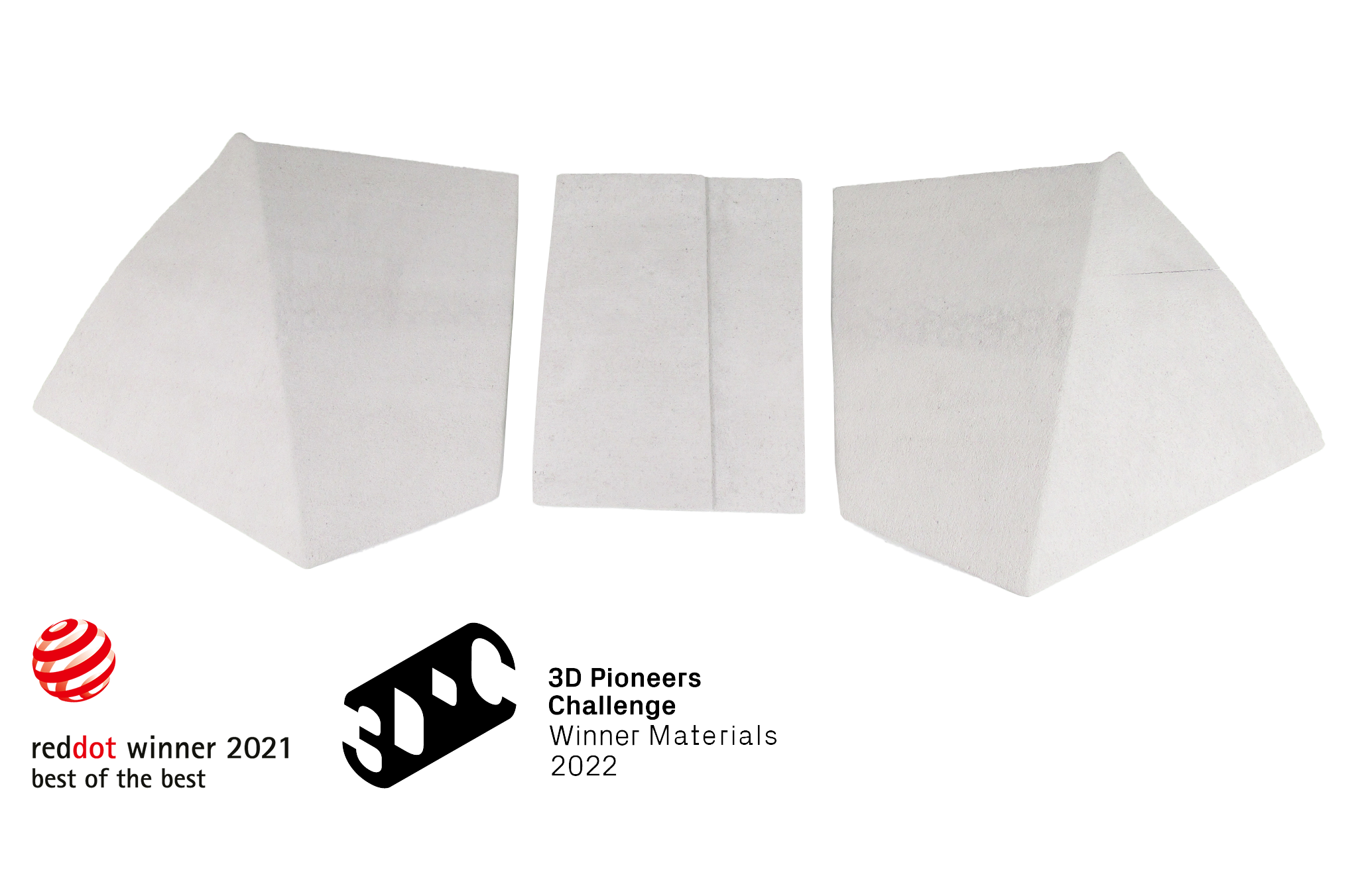
Another example is this console in collaboration with a Dutch stone company. The waste from the limestone cutting was gathered and upcycled into 3D printing powder. This gives a material with similar characteristics and look as the original stone, just made in an additive manner.
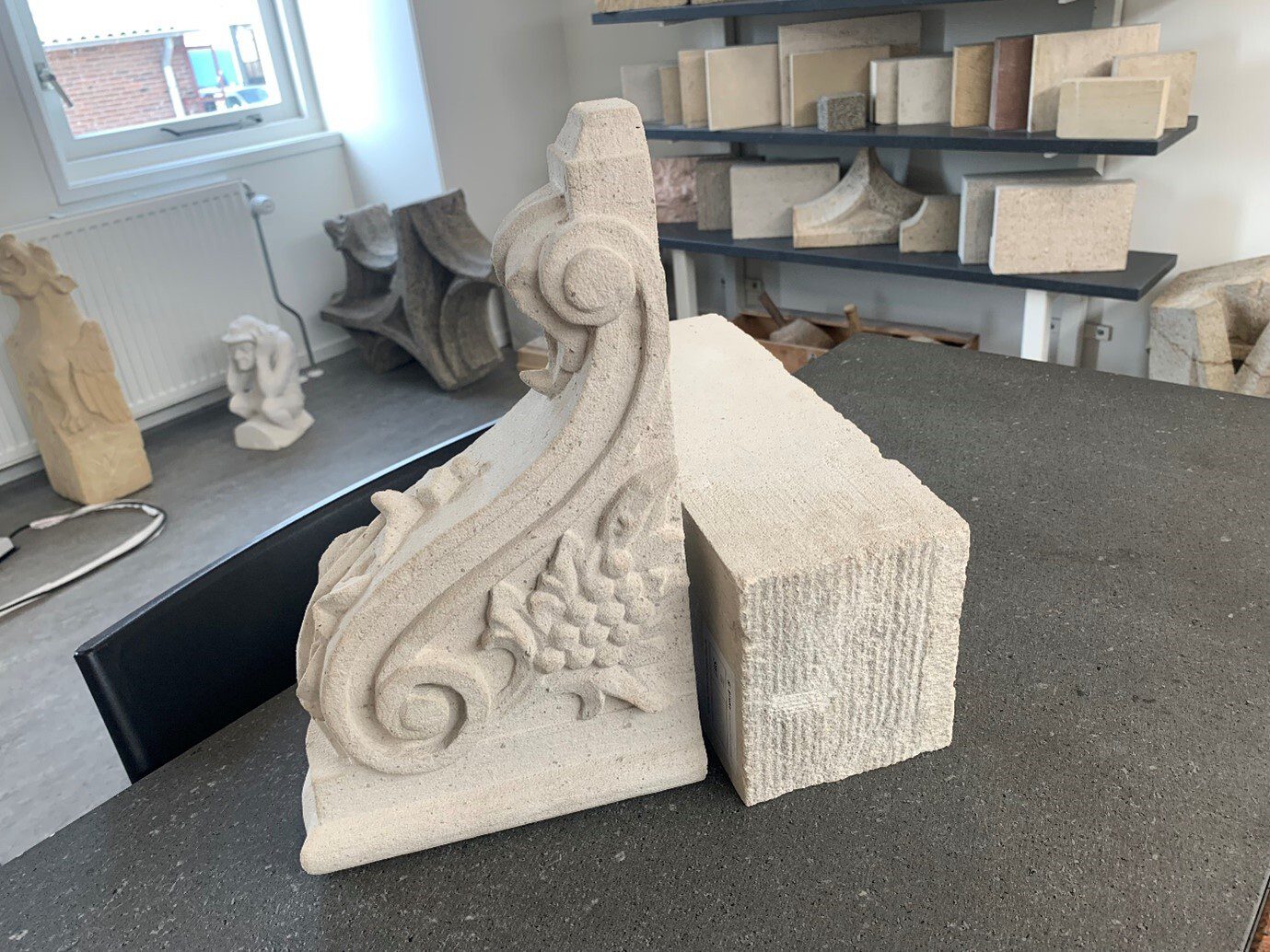
Binder jetting can even use bio-based materials. Stay tuned for future updates on the printing of recycled sawdust, coffee grounds and more. This way, CONCR3DE binder jetting enables the essence of upcycling, where the input is waste, and the output is zero waste: a net positive result for our planet.
Design Optimization
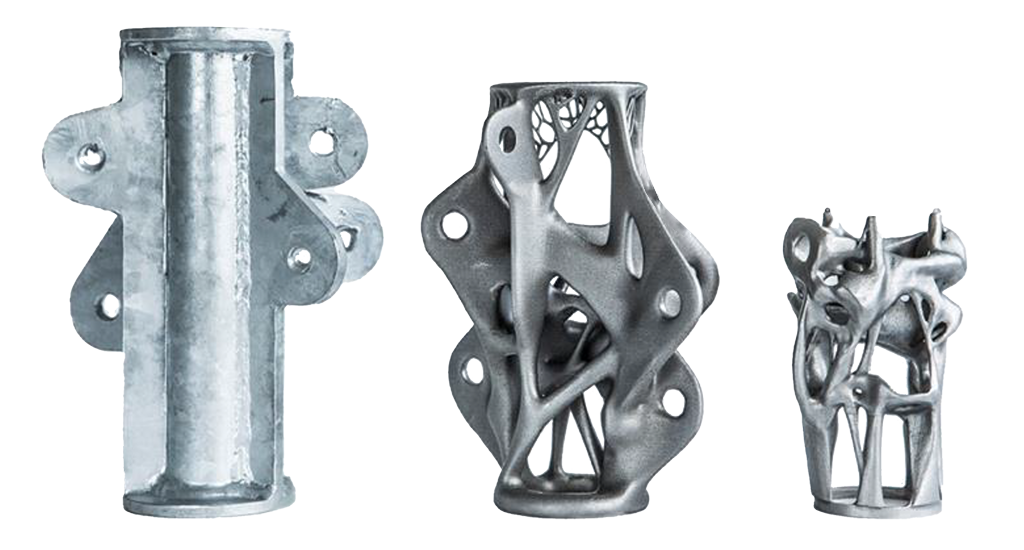
With a 3D printer, you only put material where it is needed. This means that you can optimize the geometry of the parts you are making to have less material than with conventional manufacturing methods. Using modern design tools such as parametric or algorithmic design and tool such as topology optimization give the designer easy access to highly complex geometries with similar functionality as their rougher counterparts in conventional manufacturing. The image below shows a study from engineering company Arup, where they can reduce the material required for a node by an enormous amount, just by optimizing the geometry.
In conclusion, additive manufacturing offers a more sustainable and efficient alternative to traditional methods. Not only the raw materials are often recycled, but the entire process is aimed at reducing waste. If you would like to receive more information regarding the sustainability of binder jetting, please let us know - our team is here for you.
Would you like to know more? Contact our team today!


